
Easter, Between Chocolate and the Transition in Winemaking

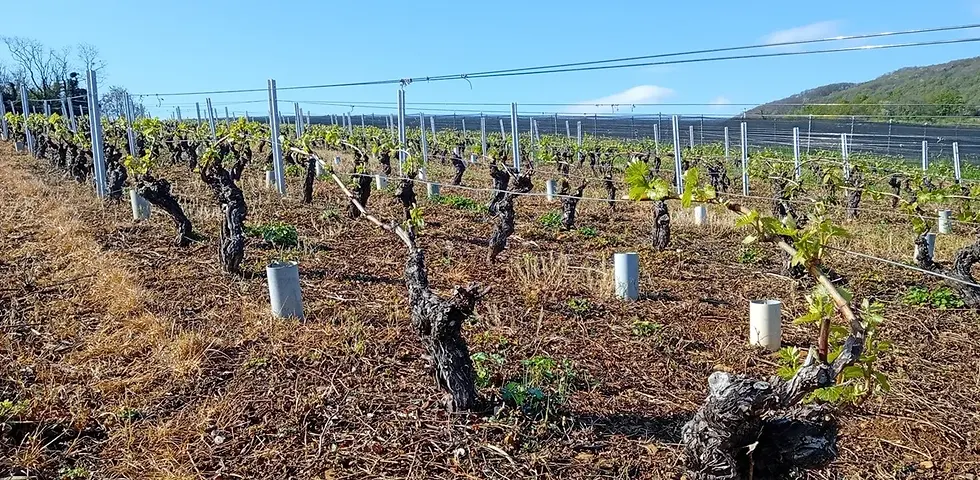
Gamay Buds in April
The Time of Transformation: Spring in the Cellar
In the silence of the Beaujolais vineyards, one cycle comes to an end.
While Easter traditionally marks the awakening of nature, it also represents a pivotal stage for the winemaker: the so-called “primeur” wines gradually give way to the 2025 vintage wines intended for ageing, which have spent the winter developing and are now beginning to be bottled.
The Choice of Yeasts: Why Wine Changes
The transition from new wine to wines intended for ageing is not simply a matter of timing. Part of this evolution is driven by biological processes invisible to the naked eye, particularly those involving yeasts.
The fleeting nature of autumn: Beaujolais Nouveau is a wine that moves quickly. Its production relies on the action of yeasts — natural microorganisms that convert grape sugar into alcohol — to develop very fruity aromas quickly, such as banana or sweets 😏. The result is a light, immediate wine, made to be enjoyed young.
The structure of spring: By contrast, wines intended for ageing take their time. The same yeasts work more slowly, allowing the wine to stabilise and refine over the winter. The fruit becomes more defined, the texture more settled, and the wine gains balance. We move from a wine for the moment to a wine for tasting.
2025: A Vintage That Takes Patience
The first tastings from barrel suggest a trend: the 2025 vintage appears to have well-controlled acidity and a denser structure than its predecessor.
While the November new wine was characterised by its lightness, the first wines coming onto the market reveal notes of dark fruit and a tannic structure that is still developing. This is the stage at which the signature of the terroirs emerges, from the granite soils of Fleurie to the schist of Morgon.
The End of One Era, the Beginning of Another
The more discreet presence of Beaujolais Nouveau, in favour of wines intended for ageing, marks a return to wines made for tasting.
On the nose: Fermentation aromas (banana, English sweets) fade completely, giving way to pure fruit and floral notes of violet or peony.
On the palate: The finish becomes longer, reflecting more gradual extraction and winter ageing that brings structure and balance.
This passing of the baton illustrates the two sides of Beaujolais: one festive and immediate, the other more structured and shaped by time. The 2025 vintage is now entering its phase of full expression, moving out of the darkness of the tanks and gradually into the glasses of wine enthusiasts.
---------------------------------------------------------------------------------------------------------------------
Documentary information on AOP Beaujolais viticulture. Excessive alcohol consumption is dangerous to your health. Please drink responsibly.
Clarify the yeast explanationMake the Easter link more natural

Comments